Life360
Life360
For a long time, society viewed obesity as a lifestyle choice or a personal failing. But medical experts now recognize it as a chronic disease, just like high blood pressure or diabetes.
Obesity is complex. It involves genetics, hormones, metabolism, and environmental factors. The World Health Organization officially declared obesity a disease years ago. This matters because it changes how we think about treatment. If you have a disease, you deserve treatment that works, not blame or shame.
Weight-loss drugs aren’t for everyone. They’re not meant for people who just want to lose a few pounds for a wedding or summer vacation. These medications are prescribed for people who have:
– A body mass index (BMI) of 30 or higher (classified as obesity)
– A BMI of 27 or higher plus a weight-related health condition like high blood pressure, type 2 diabetes, high cholesterol, obstructive sleep apnea, or cardiovascular disease
The decision to start medication should always happen after a thorough discussion with your healthcare provider about your health history, goals, and risks.
Prescription weight-loss drugs generally work in one of three ways:
– Reduce your appetite so you feel less hungry
– Help you feel full faster and longer after eating
– Change how your body absorbs fat from food
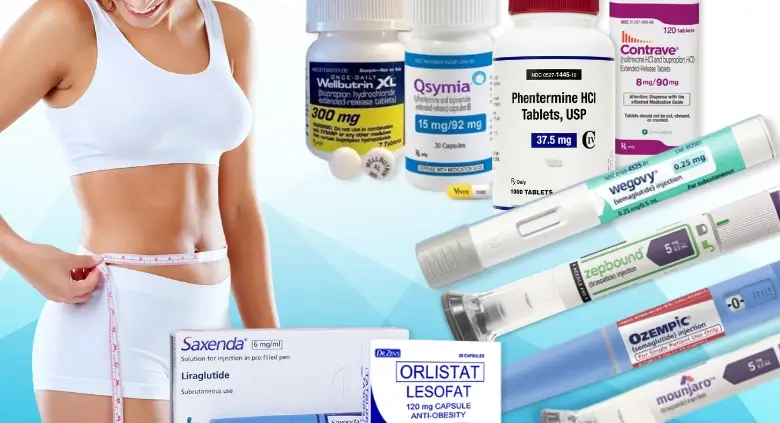
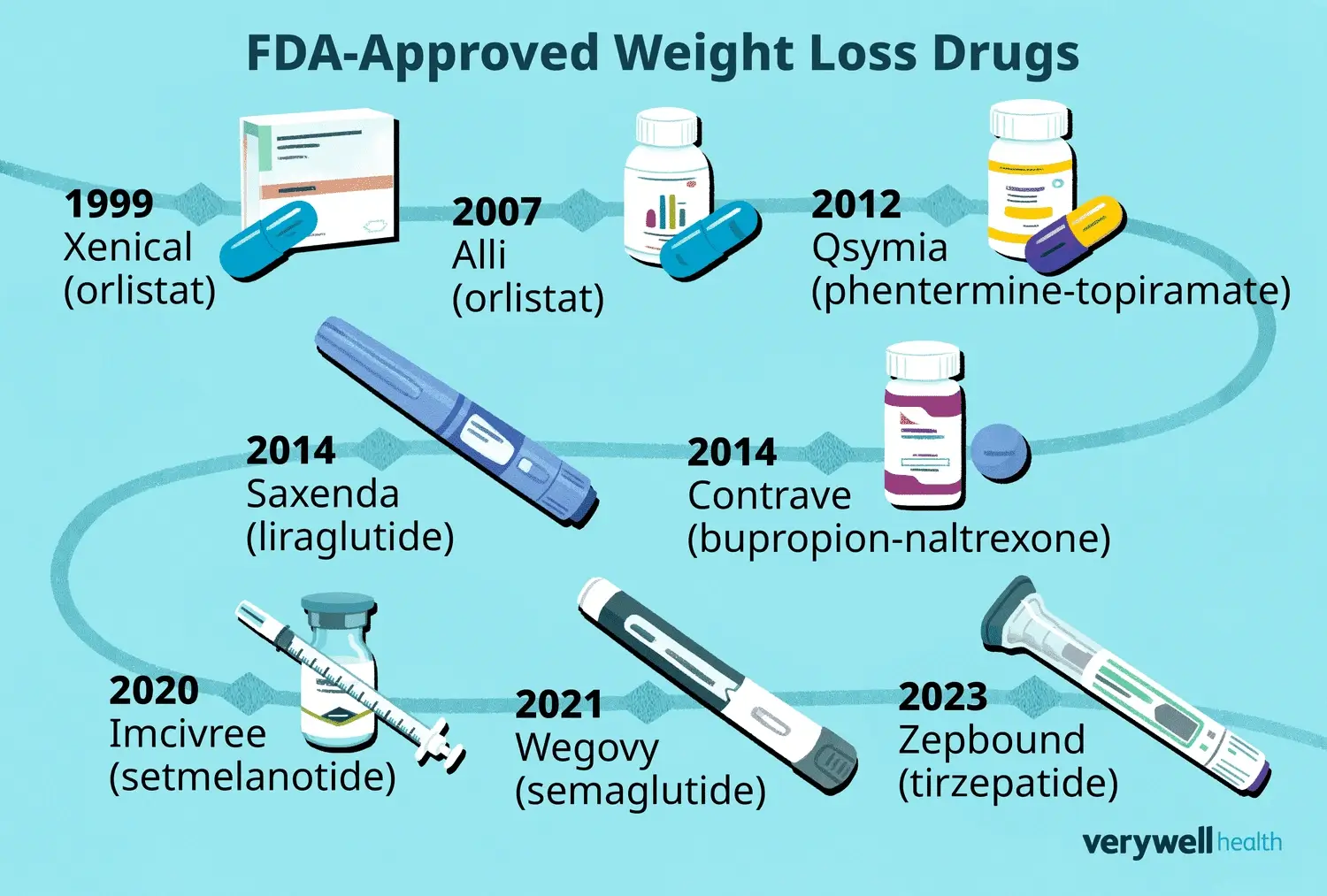
Not all weight-loss medications are equally effective. Based on the latest medical guidelines (American College of Physicians, 2026), doctors are encouraged to consider medications in this order:
– First-line (most effective): Semaglutide (Wegovy) and Tirzepatide (Zepbound)
– Second-line: Phentermine/Topiramate (Qsymia)
– Third-line: Liraglutide (Saxenda)
– Fourth-line: Naltrexone/Bupropion (Contrave)
Your doctor will help determine which medication is best for you based on your health conditions, other medications, cost, and personal preferences.
How it’s taken: Weekly injection or daily oral tablet (25 mg; approved December 2025).
How it works: Mimics a natural hormone (GLP-1) that reduces appetite, slows digestion, and helps you feel full longer.
Average weight loss: About 15% of body weight over approximately one year with the injection; about 13–14% with the oral tablet.
Additional benefits: Wegovy is also FDA-approved to reduce the risk of heart attack, stroke, and cardiovascular death in adults with established heart disease and obesity or overweight. It is also approved for the treatment of a liver condition called MASH (metabolic dysfunction-associated steatohepatitis) with moderate to advanced scarring.
How it’s taken: Weekly injection.
How it works: Activates two natural hormones (GLP-1 and GIP) that reduce appetite, increase fullness, and improve blood sugar control.
Average weight loss: About 15–21%, with some people losing over 20% of their body weight. Zepbound is also FDA-approved for the treatment of moderate to severe obstructive sleep apnea in adults with obesity.
How it’s taken: Daily injection.
How it works: Works similarly to Wegovy by mimicking GLP-1 to reduce appetite and help you stay full longer.
Average weight loss: About 5–8% of body weight after one year.
How it’s taken: Tablets taken twice daily.
How it works: Combines two medications that act on the brain. Bupropion affects dopamine and norepinephrine (brain chemicals involved in appetite and reward), while naltrexone blocks opioid receptors that influence food cravings. Together, they reduce hunger and cravings.
Average weight loss: About 5–9% of body weight after one year.
Important safety information: Contrave should not be used by people with seizure disorders, uncontrolled high blood pressure, eating disorders (anorexia or bulimia), those taking opioid pain medications, or those taking MAO inhibitor medications. Blood pressure and heart rate should be monitored regularly. There is a warning about possible suicidal thoughts and behavior, so mental health should be monitored, especially early in treatment.
How it’s taken: One capsule daily.
How it works: Combines two medications that suppress appetite through different brain pathways. Phentermine reduces appetite by increasing certain brain chemicals, while topiramate enhances feelings of fullness.
Average weight loss: About 8–10% of body weight after one year.
Important safety information: Qsymia must not be taken during pregnancy because topiramate can cause serious birth defects (cleft lip/palate). Women who can become pregnant must use effective birth control and take monthly pregnancy tests while on this medication. Qsymia should also be avoided by people with glaucoma, overactive thyroid (hyperthyroidism), or a history of cardiovascular disease. Blood pressure and heart rate should be monitored regularly.
How it’s taken: One capsule with meals (up to three times daily). Also available over the counter at a lower dose (Alli).
How it works: Blocks some of the fat you eat from being absorbed by your body.
Average weight loss: About 3–5% of body weight over one year.
Important note: The American Gastroenterological Association has recommended against the routine use of orlistat because its weight loss is modest compared to newer medications, and it causes bothersome digestive side effects including oily stools, gas, and fecal urgency. However, it may still be an option for some patients when other medications are not available, affordable, or appropriate. Patients taking orlistat should take a daily multivitamin (containing vitamins A, D, E, and K) at least 2 hours apart from orlistat.
How it’s taken: Daily injection.
How it works: Activates brain pathways (melanocortin-4 receptors) that control hunger and energy use.
Important note: Imcivree is only for people with specific rare genetic conditions that cause severe obesity, including POMC deficiency, PCSK1 deficiency, leptin receptor (LEPR) deficiency, and Bardet-Biedl syndrome. It is not prescribed for general obesity. Results vary significantly depending on the genetic condition:
– In POMC/PCSK1 deficiency: 80% of patients achieved significant weight loss (10% or more)
– In LEPR deficiency: about 45% achieved significant weight loss
– In Bardet-Biedl syndrome: about 32% achieved significant weight loss
Losing weight isn’t just about appearance — it can improve your overall health. Research shows that weight-loss medications may help:
– Lower blood sugar levels
– Reduce blood pressure
– Improve cholesterol
– Lower the risk of heart attack and stroke (proven in a large clinical trial for semaglutide, which showed a 20% reduction in major cardiovascular events)
– Improve sleep apnea
– Reduce fat buildup in the liver
– Increase mobility and quality of life
Even losing 5–10% of your body weight can significantly improve your health.
Like all medications, weight-loss drugs can cause side effects.
The most common side effects (especially with GLP-1 medications like Wegovy, Zepbound, and Saxenda) include:
– Nausea
– Vomiting
– Diarrhea
– Constipation
– Stomach discomfort
These symptoms are usually mild and often improve as your body adjusts. Doctors usually start with a low dose and increase it gradually to reduce side effects.
Orlistat has different side effects, including oily or fatty stools, gas, and fecal urgency. These are related to how the drug blocks fat absorption.
More serious but uncommon risks may include:
– Pancreatitis (inflammation of the pancreas)
– Gallbladder disease
– Severe allergic reactions
– Certain thyroid tumors (seen in animal studies with some GLP-1 medications)
– rare reports of stomach paralysis and intestinal obstruction
These medications are generally not recommended if you:
– Are pregnant, planning to become pregnant, or breastfeeding
– Have a personal or family history of medullary thyroid cancer or multiple endocrine neoplasia syndrome type 2 (for GLP-1 medications)
– Have a history of pancreatitis (for GLP-1 medications)
Some medications have additional specific restrictions:
– Contrave: seizure disorders, uncontrolled high blood pressure, eating disorders, opioid use
– Qsymia: pregnancy (causes birth defects), glaucoma, overactive thyroid, cardiovascular disease
Always tell your healthcare provider about your complete medical history and every medication or supplement you take.
An important consideration with weight-loss medications is that some of the weight you lose may come from muscle, not just fat. Research shows that roughly 25–40% of weight lost with GLP-1 medications can come from lean body mass (which includes muscle). This is similar to what happens with other forms of significant weight loss, including surgery.
To help protect your muscles:
– Eat enough protein: Aim for adequate protein at each meal (your doctor or dietitian can help set a specific target, but general guidance suggests higher protein intake during active weight loss). Eat protein-rich foods first at meals.
– Do resistance (strength) training: Lifting weights, using resistance bands, or doing bodyweight exercises is the most effective way to preserve muscle during weight loss. Aerobic exercise alone is less effective for this purpose.
– Work with a dietitian if possible, especially during the dose-escalation phase.
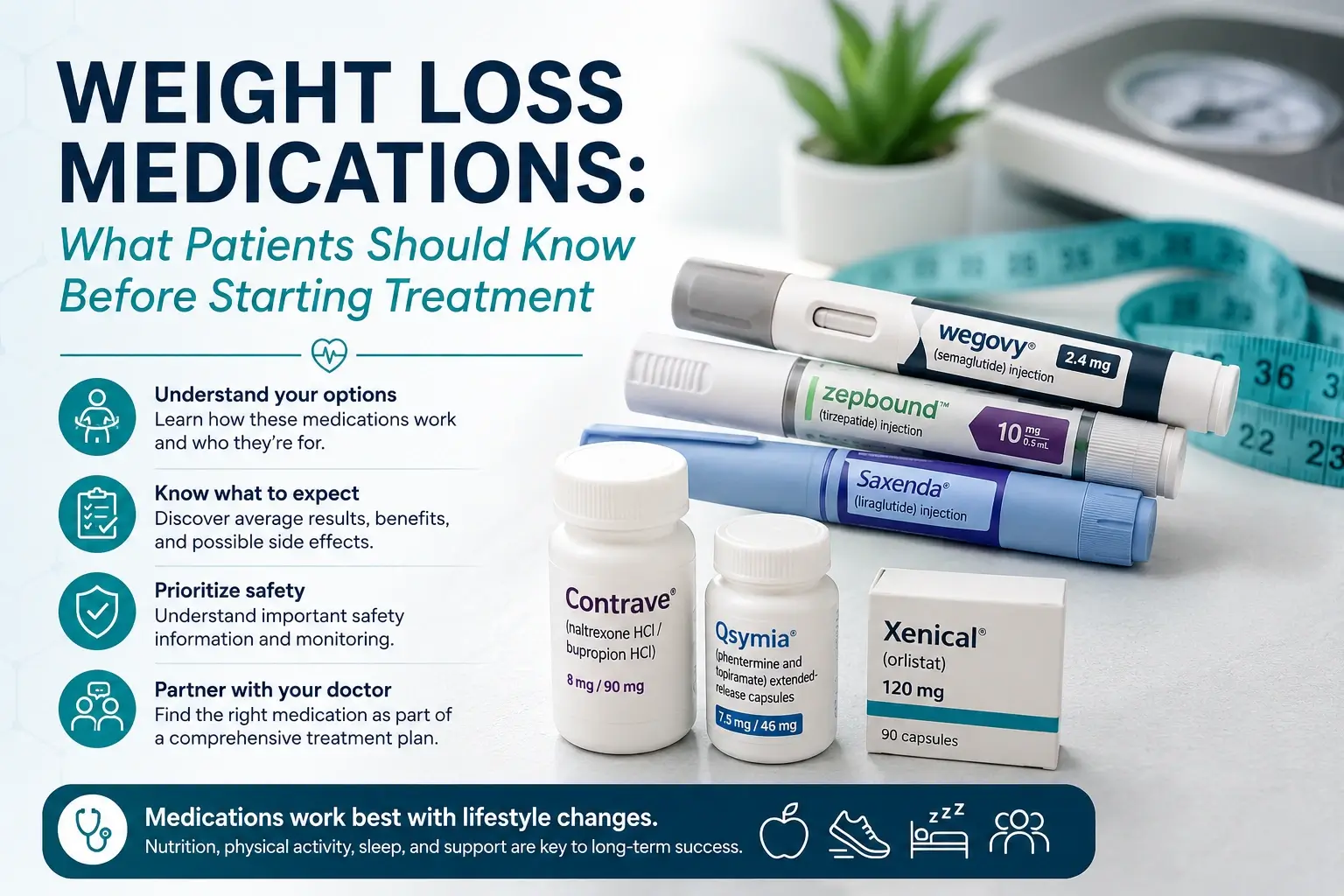
Weight-loss medications are powerful, but they work best when combined with healthy eating and physical activity. Think of them as a support tool, not a magic solution. Behavioral interventions, including diet, exercise, and behavioral counseling, remain an important part of any obesity treatment plan.
For most people, weight-loss drugs are a long-term treatment.
Here’s why: Studies show that when people stop taking these medications, they regain much of the weight they lost. In one study, people who stopped Zepbound after losing about 21% of their body weight regained about 14 percentage points of that weight within a year. Research suggests that on average, about half of lost weight is regained within one year of stopping GLP-1 medications, and health improvements (blood pressure, cholesterol, blood sugar) also reverse.
Obesity is a chronic disease, so treatment needs to be ongoing, similar to blood pressure or cholesterol medication. If you stop, the biological pressures that drive weight gain return.
The information provided in these blogs is intended for educational and informational purposes only and should not be considered medical advice, diagnosis, or treatment. If you have any medical concerns, symptoms, or questions about your health or treatment, please consult your family physician, primary care provider, or another qualified healthcare professional. Always seek professional medical advice before making any changes to your healthcare or medications.